EVs Can Break the Monopoly, If We Don’t Build a New One
I’m Azhar Bhatti. I do creative direction for a living, which is basically professional pattern spotting.
I’m Azhar Bhatti. I do creative direction for a living, which is basically professional pattern spotting. You stare at enough billboards, enough pricing tables, enough “market dynamics” dressed up as destiny, and eventually you start seeing the same shape everywhere. Also, you develop a mild allergy to the phrase “game changer,” which is unfortunate because I’m about to use it sincerely.
Pakistan’s mobility market has a shape too.
It’s a small club. A few manufacturers. A few models. A few price ladders that keep getting taller while the rest of us keep getting shorter. And after a while, you stop calling it inflated. You start calling it normal. Like it’s weather. Like it’s gravity. Like it’s the price of being alive in a place where “choice” is mostly a myth told to people who haven’t tried buying a bike in 2026.
So yes, I’m interested in EVs. Not because I want to moralize about emissions. Not because I want to do the usual TED Talk thing where we all clap politely and then go back to petrol like nothing happened. I’m interested because EVs are leverage.
EVs aren’t just cleaner. They change who gets to own mobility.
That’s the whole argument. If you only read one line, read that one.
Because the real story isn’t the battery. It’s power. Market power. The kind that decides whether a normal person can afford to move without selling a kidney or developing a spiritual relationship with installment plans. EVs open a door for more players to enter. More models. More formats. More price points. When entry becomes easier, competition becomes possible. When competition becomes possible, the customer stops being an afterthought.
And there’s another quote I keep coming back to, the kind that sounds like a fortune cookie until you’ve lived it:
“What gets measured gets managed, What gets managed get managed”
Right now, too much of our market feels like it’s measured in vibes and controlled by inertia.
That’s the dream part. Here’s the reality part.
EVs can’t properly exist here yet at scale because we don’t have the one thing that turns an EV from a cool idea into a boring daily tool.
Infrastructure.
And by infrastructure I don’t mean “one ribbon cutting charger outside a government building that stops working the moment the low wage camera crew leaves.” I mean a network that behaves like something you can rely on. A network you can see. A network that does not require you to negotiate with a guard, a cashier, your luck, and the universe.
There’s a saying engineers love because it’s both comforting and a little scary:
“All models are wrong, but some are useful.”
Right now, our charging “model” has been wrong in the ways that matter day to day.
This is where I think people misunderstand how Pakistan works.
Government involvement is necessary, sure. But if you make it primary, or even secondary, you are building your entire future on the slowest, most friction filled part of the machine. In a third-world system, the country runs itself. It runs on small businesses, on individuals, on informal systems that are somehow more consistent than formal ones. It runs on people doing things because they can, not because they got permission.
Or as the oldest motto in this region goes:
“Allah Barra Malik Hai.”
A terrible national strategy. A surprisingly accurate description of the operating system.
So the charging network that actually normalizes EVs here won’t be one big entity trying to own the whole game. That would just recreate the same problem in a new clown outfit. One monopoly replaced with another, but now it’s “green” so everyone is supposed to be grateful.
What we need is distributed. Messy in a healthy way. A lot of hosts. A lot of locations. A lot of people with belly in the game. A system where the incentives pull the network into existence, rather than waiting for a perfect plan and a perfect rollout and a perfect budget that never arrives.
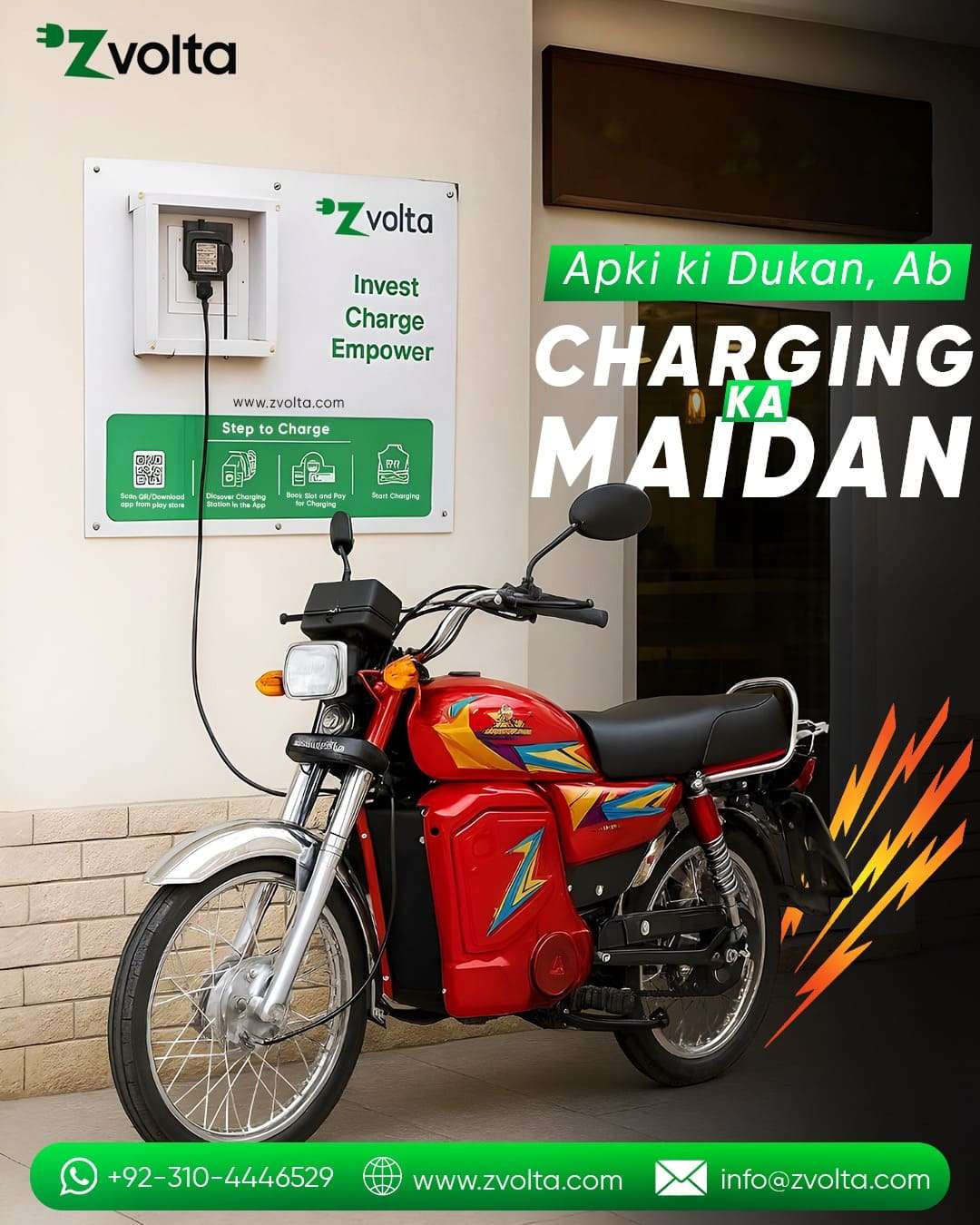
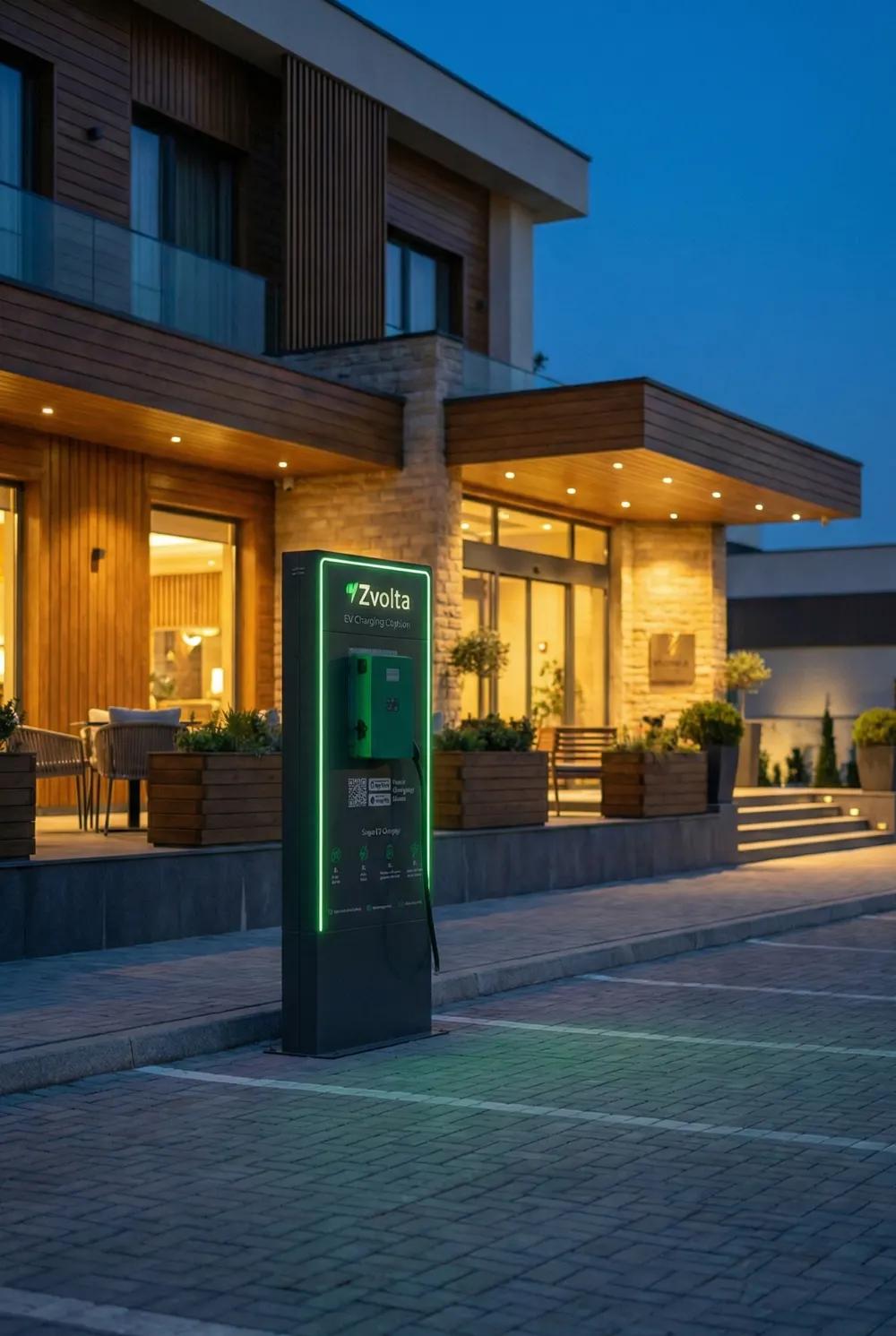
This is why I’m paying attention to Zvolta.
Not because it’s the only network. Not because it’s the biggest. And definitely not because I think it’s some magical silver bullet. But because the approach is one of the best ways I’ve seen to normalize charging without making it depend on government reliability.
They’re doing something very Pakistani in the best sense. They’re making it worth it for businesses to host chargers. That matters more than people realize. If hosting works economically, the network expands organically. If the network expands organically, it survives long enough to become stable. If it becomes stable, confidence grows. And confidence is the actual fuel of adoption.
There’s another layer to this that I like, and it’s not technical. It’s structural.
When many different hosts can participate, competition stays healthier. Prices stay more in check. No single entity gets to quietly become the gatekeeper. Even if one network grows, a broad host ecosystem makes it harder for the whole thing to turn into a toll booth.
And yes, I’m aware of the irony. I’m literally arguing that EVs can break a monopoly, but only if the infrastructure doesn’t become one. Humans love rebuilding the same prison with nicer paint. Usually with a keynote speech and a “strategic partnership.” which I like to call “LMAOs”
Now, let’s not pretend this is solved.
Charging still takes time. Security at night is a real concern. Adoption is a slow, social process. There are layers of anxiety people carry that don’t vanish because an app exists. EV charging, hot swappable batteries, cheaper EVs, better city planning, all of it plays a role. We need multiple solutions running in parallel, not one hero story.
Because I’m not trying to “charge my car” if the cost is my phone, wallet, wet pants, and a lot of later realized anger. I want sustainability, not a character development arc.
But here’s why I’m optimistic.
Zvolta is trying to make the experience seamless in the way that actually matters. Self serve. Minimal human dependency. You pull up, you start a session, payment is handled, you leave. No awkwardness. No standing around like you’re asking for a favor. That kind of autonomy is not just convenience, it’s dignity. And dignity scales better than hype.
I’ve looked into the system more than a normal person would. So yes, my opinion may be biased. I also know the owners well enough to believe this isn’t a rug pull. There’s a sincere intent to build something that sticks. In Pakistan, sincerity is underrated as a competitive advantage. Mostly because we’ve been trained not to expect it.
So that’s where I land.
EVs are not just a cleaner option. They’re a chance to renegotiate who gets to move. But the vehicles don’t matter if the infrastructure doesn’t exist, and the infrastructure won’t exist if we build it like a state project waiting for permission. It needs to be distributed, host led, incentive driven, and standardized enough to feel real.
I’m just happy that one of the pieces is finally showing up with a proper standard.
Not the whole answer. But a piece that actually fits the country we live in.