Choosing the right EV charger for your home
A practical guide to choosing a home EV charger in Pakistan: your vehicle, your daily driving, your electricity connection, and 3 kW vs 7 kW.
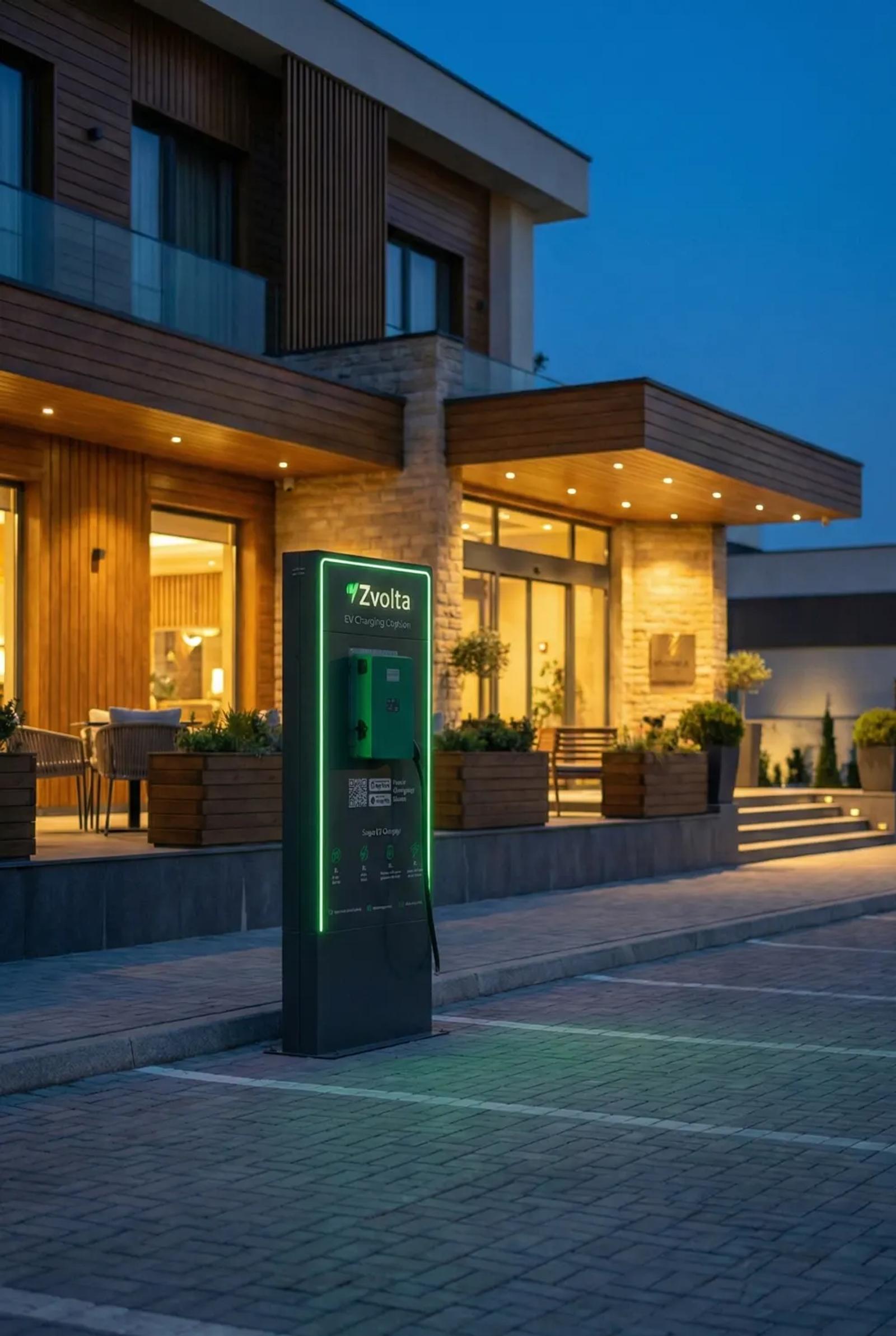
The right home charger depends on three things: what you drive, how far you drive each day, and the electricity connection at your home. Get those right and you'll wake up to a charged vehicle every morning without overloading your wiring or paying for power you'll never use.
1. Start with your vehicle
Electric bikes, scooters and rickshaws charge from an ordinary AC socket through their own charger. They don't need much power, and a 3 kW charger with universal sockets covers them comfortably.
Electric cars are different. Most use a Type 2 connector for AC charging, and every car has a maximum AC power it can accept, set by the charger built into the car. A more powerful wall charger won't charge a car faster than that limit, so check your car's manual or spec sheet before you choose.
2. Work out how much you drive
A charger adds roughly its power rating in energy every hour. A 3.3 kW charger adds about 3.3 kWh an hour; a 7 kW charger about 7 kWh. Compare that with how much energy your daily driving uses:
- A two- or three-wheeler doing city errands usually needs only a few kWh a day, which a 3 kW charger replaces in an hour or two.
- A car doing a normal daily commute can usually be topped up overnight on 7 kW, even if the battery is large.
- If you only ever charge overnight, a bigger charger mostly buys you speed you won't use.
3. Check your electricity connection
This is the part people skip, and the one that matters most for safety.
- Single-phase (230 V), the standard connection in most homes: suits the 3 kW and 7 kW chargers. The 7 kW draws up to 32 A, so your meter, main breaker and wiring need to handle that alongside the rest of the house.
- Three-phase (400 V), common in larger homes, offices and commercial buildings: needed for the 22 kW charger, which suits shared parking and fleets more than a single home.
If you're not sure what you have, that's fine. A site survey checks the connection, the load and the cable route before anything is installed.
4. Choose between 3 kW and 7 kW
- Choose the 3 kW if you charge bikes, scooters or rickshaws, or a car that's only driven short distances. It works on any home connection and has universal sockets, with options for more than one vehicle.
- Choose the 7 kW if you charge an electric car most days. It uses a Type 2 connector and charges a car more than twice as fast as 3 kW, if your car and your connection allow it.
5. Think about installation and safety
A home charger runs at high current for hours at a time, so it should be on its own protected circuit, installed by someone who checks the wiring first. Zvolta chargers come with standard installation included and built-in protection, and connect to the Zvolta app so you can see every session.
Next steps
Compare the models side by side on the chargers page, or ask for a quote and we'll recommend the right charger for your home after a quick look at your setup.